Dans les recoins silencieux du sud-est de Portland, Oregon, existait un foyer qui fonctionnait selon une cruelle hiérarchie de valeur. Mon nom est
Diana Meyers
, et pendant les treize premières années de ma vie, j’étais la “suppléante.” Mon père, Richard, était un homme qui avait depuis longtemps abandonné sa colonne vertébrale à ma mère, Sandra. Elle était une femme qui considérait l’amour comme une ressource finie—une monnaie qu’elle thésaurisait pour ma sœur, Tiffany.
Tiffany était l’enfant chérie, le reflet de la vanité de notre mère. Moi, en revanche, je ressemblais à notre grand-mère paternelle. Pour ma mère, j’étais un rappel vivant d’une femme qu’elle n’avait jamais aimée. Les disparités étaient tissées dans le tissu de notre quotidien :
The Birthdays:
Tiffany’s were gala events; mine were marked by discounted grocery store cakes with the names of strangers scraped off the frosting.
The Future:
By the age of twelve, I discovered Tiffany had a robust college fund. When I asked about mine, my mother’s response was chilling:
“You’re good at adapting, Diana. You’ll figure it out.”
I didn’t just figure it out; I excelled. In 2010, I was accepted into the
Oregon STEM Summer Academy
on a full scholarship worth
$4,200
. It was my ticket out, a validation of my intellect. But when Tiffany wanted to attend an expensive, non-scholarship drama camp, my mother demanded I forfeit my spot so they could use my “savings” (which didn’t exist) to fund Tiffany’s hobby.
For the first time in my life, I said,
“Non.”
The Night the Lights Went Out
The retaliation was swifter and more brutal than I could have imagined. Three days later, I returned from the library to find my life packed into two black garbage bags on the porch. My mother’s face was a mask of cold resolution.
“I called Harold,” she said. “From now on, you’re his problem.”
I sat on those bags for four hours. The porch light stayed off. My father stayed in the hallway, a silhouette of cowardice. My sister watched from the upstairs window, a spectator to my exile. Then, the gray Honda of my
Oncle Harold
pulled into the driveway. He didn’t ask questions. He didn’t lecture. He simply held me until I could breathe again and said,
“From now on, you have a home.”
Uncle Harold was a self-made titan of Seattle real estate. He had built
Meyers Property Holdings
from a single office building into a multimillion-dollar portfolio. Under his wing, I didn’t just survive; I flourished. Harold wasn’t just my uncle; he became my mentor and my true father. He taught me that the most powerful person in a room never needs to shout. He also taught me that those who abandon you only return when they smell success. He was right. Over fifteen years, my biological parents only reached out when they needed money or saw my name in the
Seattle Business Journal
. I deleted their emails without a second thought.
In early 2025, Uncle Harold passed away peacefully. The grief was a physical weight, but it was quickly interrupted by the vultures. My mother, Sandra, called me for the first time in over a decade—not to offer condolences, but to announce that she and Richard would be attending the will reading with their attorney,
Victor Harrington
.
They filed a claim of
influence indue
, alléguant que j’avais manipulé un homme mourant pour obtenir sa fortune. Ils réclamaient
$23.7 million
, comptant sur l’idée que je leur paierais un \”accord pour faire taire\” afin d’éviter un procès public.
La réunion stratégique
Mon avocat successoral,
Margaret Morrison
, s’est assise avec moi dans son bureau au 47e étage du Columbia Center. Elle a révélé un secret que Harold gardait depuis des années.
La dette:
Richard devait à Harold $80,000 depuis 2002 qui n’ont jamais été remboursés.
Le document:
Une renonciation volontaire aux droits parentaux signée par mes parents en 2010.
L’atout dans la manche:
Une manœuvre juridique secrète que Harold a exécutée en 2012.
\”Harold l’avait prévu,\” dit Margaret. \”Il voulait que la vérité soit consignée.\”
La lecture du testament : Clause Sept
14 mars 2025. La salle de conférence était remplie de représentants d’associations caritatives, d’auditeurs et des \”vautours.\” Sandra entra en robe noire et perles, jouant le rôle de la belle-soeur en deuil. Elle saisissait toutes les occasions pour murmurer du venin à propos de \”division\” et \”manipulation.\”
Margaret Morrison commença la lecture. La pièce était d’un silence mortel tandis que les actifs étaient énumérés :
$23.7 million
en biens immobiliers et avoirs liquides.
La confrontation
Lorsque Margaret atteignit la section concernant Richard, elle lut à haute voix les propres mots d’Harold. Il détaillait la dette impayée et la nuit où ils m’avaient mise dehors. Sandra se leva d’un bond, criant au sujet des \”liens familiaux\”.
Je la regardai enfin. \”Sandra, tu as fait un choix il y a quinze ans sur ce perron. Tout ce qui se passe aujourd’hui est simplement la conséquence de ce choix.\”
Mais le vrai coup — celui qui laisserait la pièce dans un état de \”horreur\” pour les parents biologiques — était
Clause sept
.
La révélation de l’adoption
Margaret ajusta ses lunettes et lut :
\”Je lègue par la présente la totalité de ma succession… à ma
fille légalement adoptée
, Diana Marie Meyers.\”
Le mot \”adoptée\” frappa la pièce comme un choc physique. En 2012, alors que mes parents biologiques avaient déjà renoncé à leurs droits, Harold m’avait officiellement adoptée. Légalement, Richard n’était plus le frère d’Harold aux yeux du droit des successions ; j’étais la seule héritière et fille d’Harold. Richard et Sandra étaient pour moi des étrangers juridiques.
L’effondrement d’Harrington
Le coup de grâce vint lorsque Margaret révéla que leur avocat, Victor Harrington, avait un énorme conflit d’intérêts. Il avait été renvoyé par Harold des années plus tôt pour avoir tenté de le forcer à inclure Richard dans le testament. Le visage d’Harrington devint couleur cendre quand il réalisa que sa carrière était essentiellement terminée. Il s’enfuit de la pièce, laissant Sandra et Richard debout au milieu de l’épave de leur propre cupidité.
Dans les mois qui suivirent, les retombées furent considérables.
Victor Harrington:
Suspendu du barreau pendant six mois et condamné à une amende de 15 000 $ pour des violations déontologiques. La réputation de son cabinet fut irrémédiablement ternie.
Sandra:
Envoya un courriel désespéré affirmant qu’elle \”m’aimait toujours\”. J’ai répondu par quatre phrases, mettant fin à notre communication pour toujours.
Tiffany:
Sent a letter of genuine accountability. She admitted to watching me on the porch for four hours and doing nothing. It was the first honest thing a “Meyers” had ever said.
The Legacy
Today, I stand at the helm of Meyers Property Holdings. We’ve grown the portfolio to
$26.5 million
. But more importantly, I established the
Meyers STEM Scholarship
. It provides full funding for children from broken homes who show promise in science and math—the same chance I almost lost.
I still talk to Tiffany once a month. It’s not a perfect relationship, but it’s a start. As for Sandra and Richard, they are ghosts in my rearview mirror.
Uncle Harold taught me that family isn’t about the blood that flows through your veins; it’s about the people who choose to stand by you when the porch lights go out. I am no longer the spare child. I am the legacy.
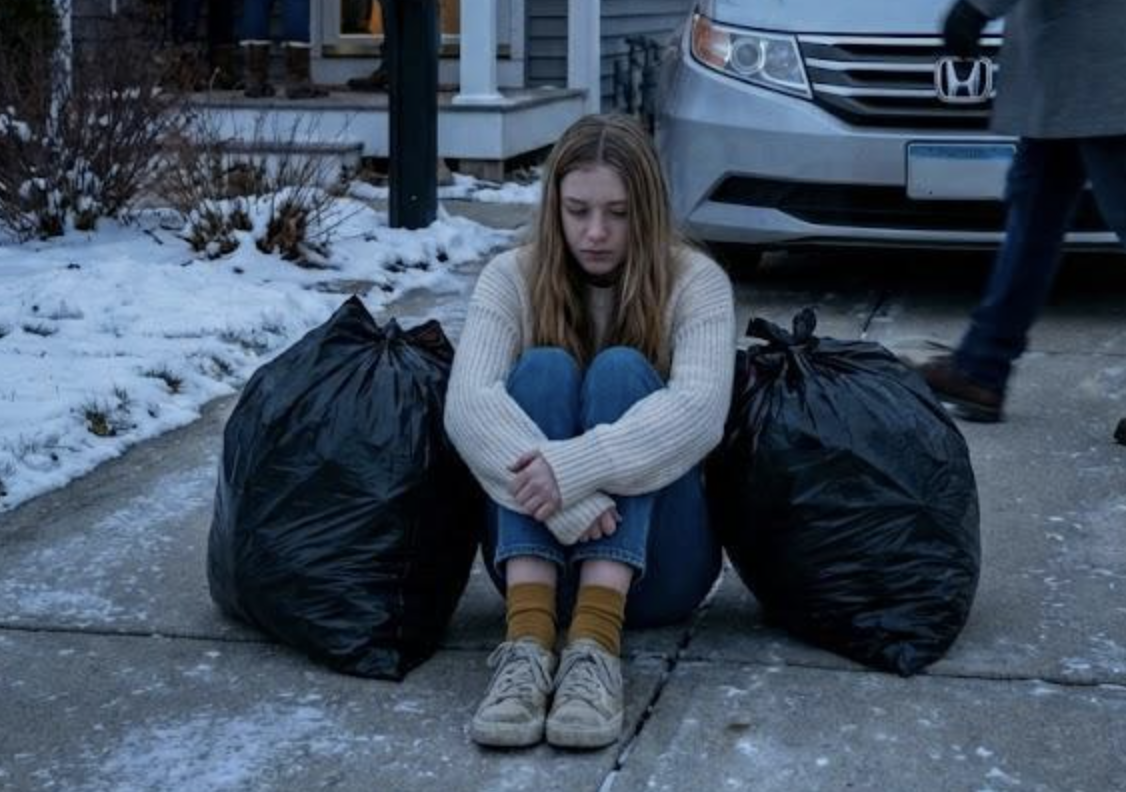
Quand mes parents m’ont reniée à 13 ans, mon oncle riche m’a recueillie. 15 ans plus tard, ma mère est arrivée à la lecture du testament en s’attendant à des millions… jusqu’à ce que je la fasse taire. L’AVOCAT FUT SAISI D’HORREUR.
Advertisment
Advertisment